Older fire doors can contain asbestos cores — and they can't be modified or repaired safely. Element identifies suspect doors across the Gold Coast, Brisbane and Northern NSW and manages compliant, documented replacement.
If a fire door predates the mid-1980s, treat it as suspect until proven otherwise.
Fire doors manufactured before the mid-1980s sometimes used asbestos in the core for its fire-resisting properties. While the door is intact and undisturbed, it isn't necessarily a hazard — but the moment it's drilled, cut, sanded or even re-locked, that core can release fibres. That's what makes asbestos fire doors different from any other compliance defect: you can't just repair them.
Any work that disturbs the door — including something as routine as changing a lock or adjusting hardware — carries risk, and removal must be handled by a licensed asbestos contractor. Getting this wrong isn't just a compliance problem; it's a health and safety one, with obligations on the body corporate and building owner.
We identify suspect doors during inspection, flag them clearly in your report, and — rather than modify them — coordinate safe removal by a licensed asbestos contractor followed by installation of a correctly rated replacement doorset to AS1905.1. Every replacement is tagged, certified and documented, so a health hazard becomes a closed, compliant item on your records.
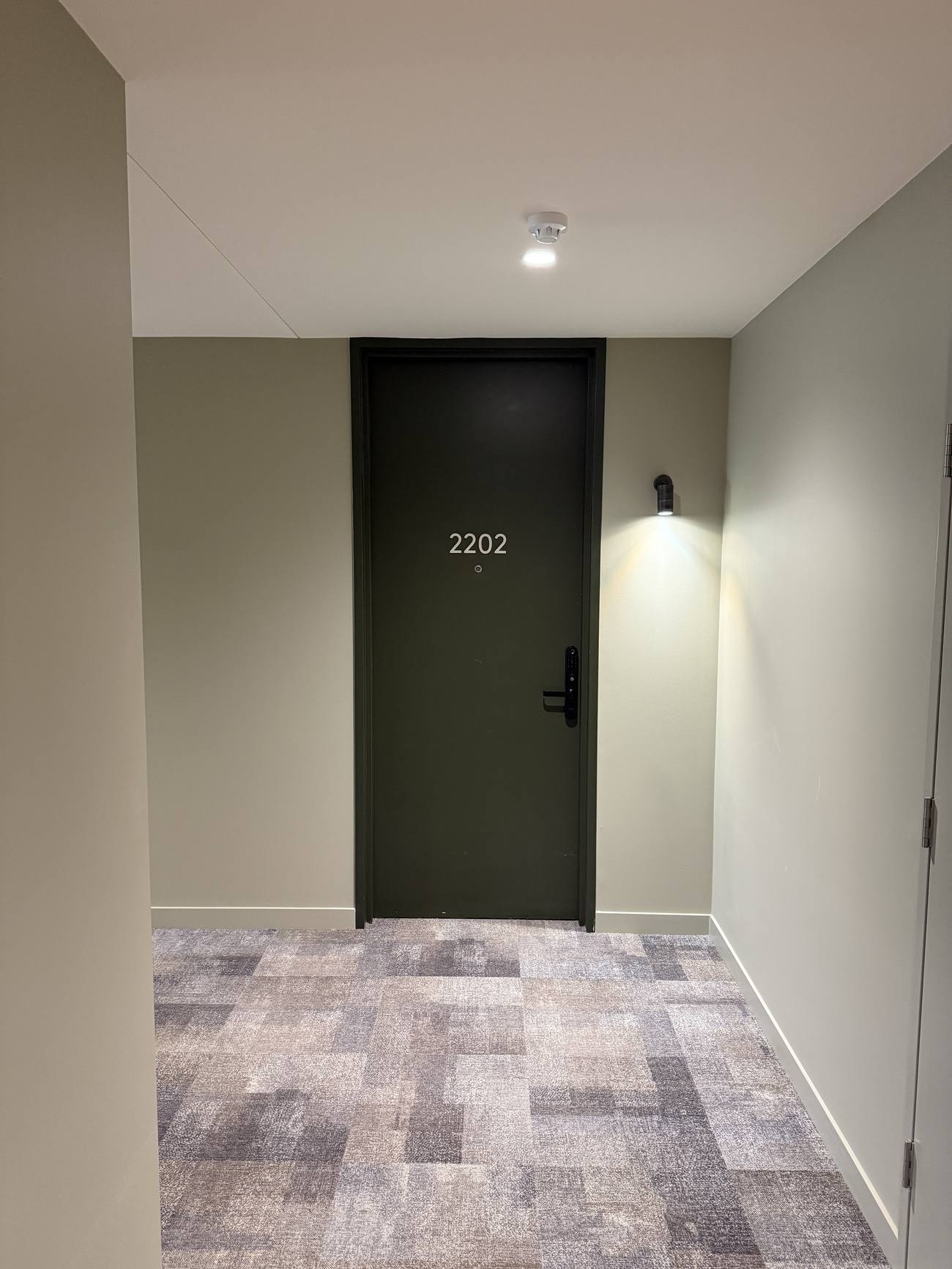
Fire doors installed before the mid-1980s are the highest-risk group. Age of the building and original doors is the first thing we check.
Asbestos-core doors can feel notably dense. Weight alone isn't proof, but combined with age it's a flag for further assessment.
Never re-lock, drill or plane a suspect door. Even minor hardware changes can disturb an asbestos core — stop and have it assessed first.
Older doors with no legible tag or traceable rating need assessment before any work, not a quick patch.
A suspect door that's already been cut, damaged or drilled needs urgent, licensed attention — disturbance may already have occurred.
Buildings from the 1990s may also carry recalled Korab doors. Older stock often needs a coordinated assessment for both issues at once.
Never modify a door you suspect — assess it first.
One of our clients was advised by two other fire companies to repair recalled doors that were illegal to touch. The lesson applies doubly to asbestos: the cheap, fast option — quietly re-locking or patching an old door — is exactly the action that can release fibres and turn a manageable replacement into a serious incident.
Element gives body corporates the straight information they need to meet their obligations: which doors are suspect, why they can't be repaired, and how replacement is handled safely and compliantly. Honest advice first, licensed work second.
Founded by a qualified shopfitter and joiner — installations and repairs meet AS1905.1, the actual standard an inspector measures against.
We'll tell you when a repair is fine and when a door genuinely needs replacing — clear advice your committee can act on, not upsell.
Itemised, per-door quotes and insurance-grade reports your strata manager can table at the next meeting without translation.
Biggera Waters based and owner-run — you always know who is doing the work and who to call.
Phone, email or the form below — every enquiry lands in our job system, so nothing gets missed and the owner reads each one personally.
Smaller jobs are quoted within 48 hours. Larger buildings get a scheduled site inspection within 48 hours, then an itemised, per-door quote your committee can table at an AGM.
Suspect doors are flagged — not modified. Removal is coordinated through a licensed asbestos contractor, then we install a correctly rated replacement doorset to AS1905.1.
Each replacement is tagged, certified and documented with QBCC-licensed compliance paperwork — turning a health hazard into a closed, compliant record.

Older building stock exists right across our service area — the established strata of the Gold Coast, Brisbane's character apartment buildings, and Northern NSW coastal complexes. Wherever the building, the rule is the same: a suspect fire door is assessed before anyone touches it.
As a QBCC-licensed fire door specialist working alongside licensed asbestos contractors, we coordinate the whole process so your committee deals with one point of contact for identification, safe replacement and certification.
Can't see your question? Call 0405 783 032 — we'd rather give you a straight answer than have you guessing.
Fire doors manufactured before the mid-1980s sometimes contained asbestos cores. These can't be modified — even changing a lock — without risk, and removal must be handled by a licensed asbestos contractor. An inspection will flag any suspect doors so they can be assessed properly.
No. Unlike most fire door defects, a door with an asbestos core can't be repaired or modified — any disturbance risks releasing fibres. The compliant path is safe removal by a licensed asbestos contractor and replacement with a correctly rated doorset installed to AS1905.1.
The body corporate is generally responsible for fire doors on common property and carries duties around managing asbestos in those elements. That includes not carrying out or authorising work that could disturb a suspect door. We help committees identify suspect doors and coordinate compliant replacement.
Licensed asbestos removal is carried out by a licensed asbestos contractor — we coordinate that step and then supply, install and certify the replacement fire doorset. You deal with one point of contact for the whole process across the Gold Coast, Brisbane and Northern NSW.
Phone, email, or the enquiry form — whatever's fastest for you. Every enquiry lands in our job system, and the owner reads each one personally.
No obligation — most enquiries answered the same day.